Three self-powered sensors. One platform.
HotDrop™ measures amperage. VoltDrop™ measures voltage, current, and power factor. PulseDrop™ counts pulses from gas, water, and BTU meters. All three ride the same LoRaWAN network into CloudVU.
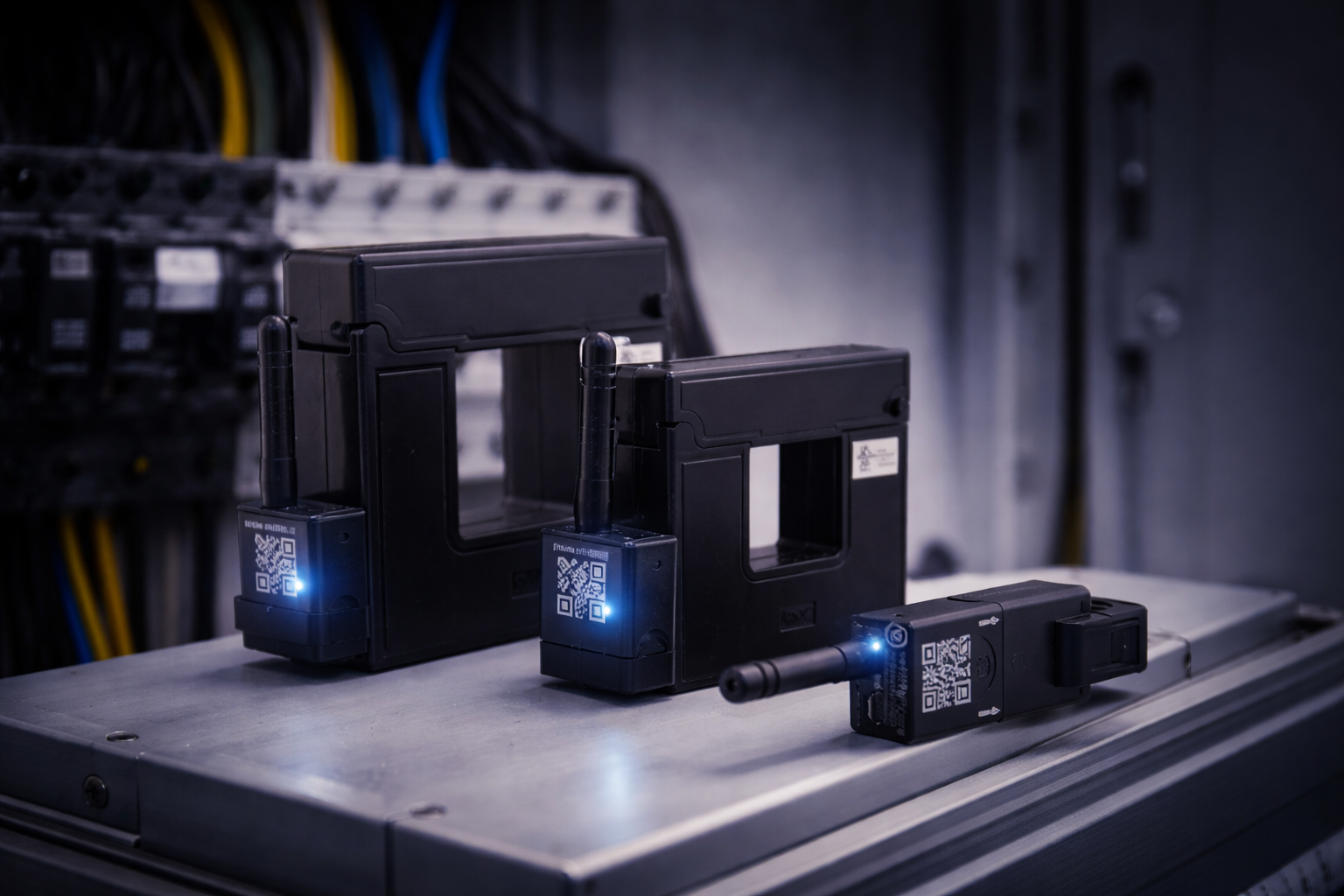
Pick the sensor that fits the circuit.
Same install pattern, same LoRaWAN backbone, same CloudVU portal. The differences are what they measure and what they clip onto.
| Specification | Sensor 01 HotDrop™ | Sensor 02 VoltDrop™ | Sensor 03 PulseDrop™ |
|---|---|---|---|
| Form factor | Split-core CT clip | Modular meter + Rogowski / CT head | Pulse-input enclosure |
| What it measures | Amperage, amp-hours, min/max amps | Voltage, current, power factor, real and apparent energy, single & multi-phase | Pulse counts from dry-contact / contact-closure meters (gas, water, electric, BTU) |
| Install method | Snaps over a live conductor in seconds; no panel-down | Voltage taps + coil/CT around conductor; no panel-down | Two-wire connection to existing meter pulse output |
| Accuracy class | ANSI C12.20 Class 0.5 | ANSI C12.20 Class 0.5 (revenue-grade) | Pulse-faithful; accuracy inherited from upstream meter |
| Sensor range | 300A · 400A · 600A · 1200A · 2000A · 4000A XL | 85–305 VAC; up to 4000A via coil/CT | Dry-contact / contact-closure inputs |
| Self-powered | Yes — harvests from measured conductor | Yes — harvests from measured conductor | Battery (10-year typical) |
| Wireless protocol | LoRaWAN · 902–928 MHz (US915) | LoRaWAN · 902–928 MHz (US915) | LoRaWAN · 902–928 MHz (US915) |
| Range | Up to ~14 km line-of-sight, building-penetrating | Up to ~14 km line-of-sight | Up to ~14 km line-of-sight |
| Default sample cadence | 1-minute intervals | 1-minute intervals | Configurable; pulse-event driven |
| Operating temperature | −20°C to +60°C | −20°C to +60°C | −40°C to +120°C |
| Enclosure rating | Indoor panel | Indoor panel | IP67 (outdoor-rated) |
| Best for | Sub-circuit amperage profiles, demand-charge analysis, motor / chiller / HVAC monitoring, tenant cost allocation | True kWh + power-factor billing, polyphase service entrances, M&V on retrofit projects, ESG/ENERGY STAR reporting | Gas, water, BTU and legacy electric meters with pulse outputs; campground pedestals; outdoor & weather-exposed locations |
| Patents | US 10615641, US 11205927, US 11661776, US 11874361, US 11991490, US 12035086, US D931820, EP 3646040, JP 7300399, KR 10-2526567 | US 11874361, US 11991490, US D931820 | US 11991490, US D931820 |
HotDrop™
The self-powered amperage clip.
HotDrop™ snaps over a live conductor and starts reporting amperage in under a minute. A split-core current transformer measures the current; the device harvests its own power from the conductor it sits on. No batteries to swap. No panel downtime to schedule.
Key specs
- Measures
- Amperage · amp-hours · min/max
- Voltage handled
- Up to 600 VAC
- Sensor range
- 300A – 4000A XL (6 sizes)
- Accuracy
- ANSI C12.20 Class 0.5
- Wireless
- LoRaWAN · US915
- Power
- Self-powered (energy harvesting)
VoltDrop™
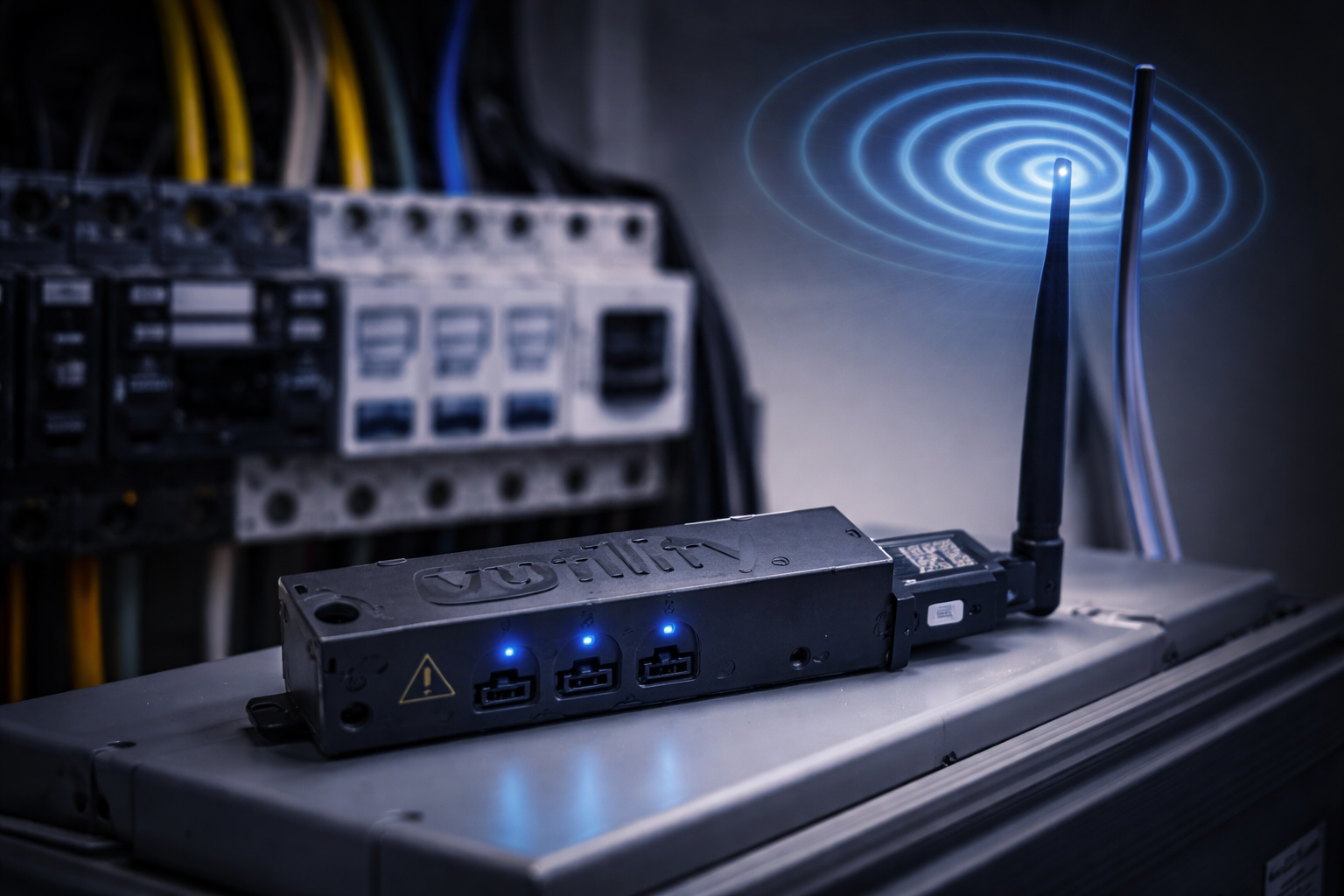
Revenue-grade polyphase metering.
VoltDrop™ is a self-powered polyphase meter for true RMS voltage, current, power factor, and real + apparent energy across single- and three-phase services. Choose a 24″ Rogowski coil, 8″ Rogowski, or 300A CT head to match the conductor. Mounts at the service entrance or branch panel without taking power down.
Key specs
- Measures
- V · A · PF · kWh · apparent kVAh
- Voltage range
- 85–305 VAC
- Current range
- Up to 4000A via coil/CT
- Phases
- Single-phase & 3-phase (Wye/Delta)
- Accuracy
- ANSI C12.20 Class 0.5
- Power
- Self-powered (energy harvesting)
PulseDrop™
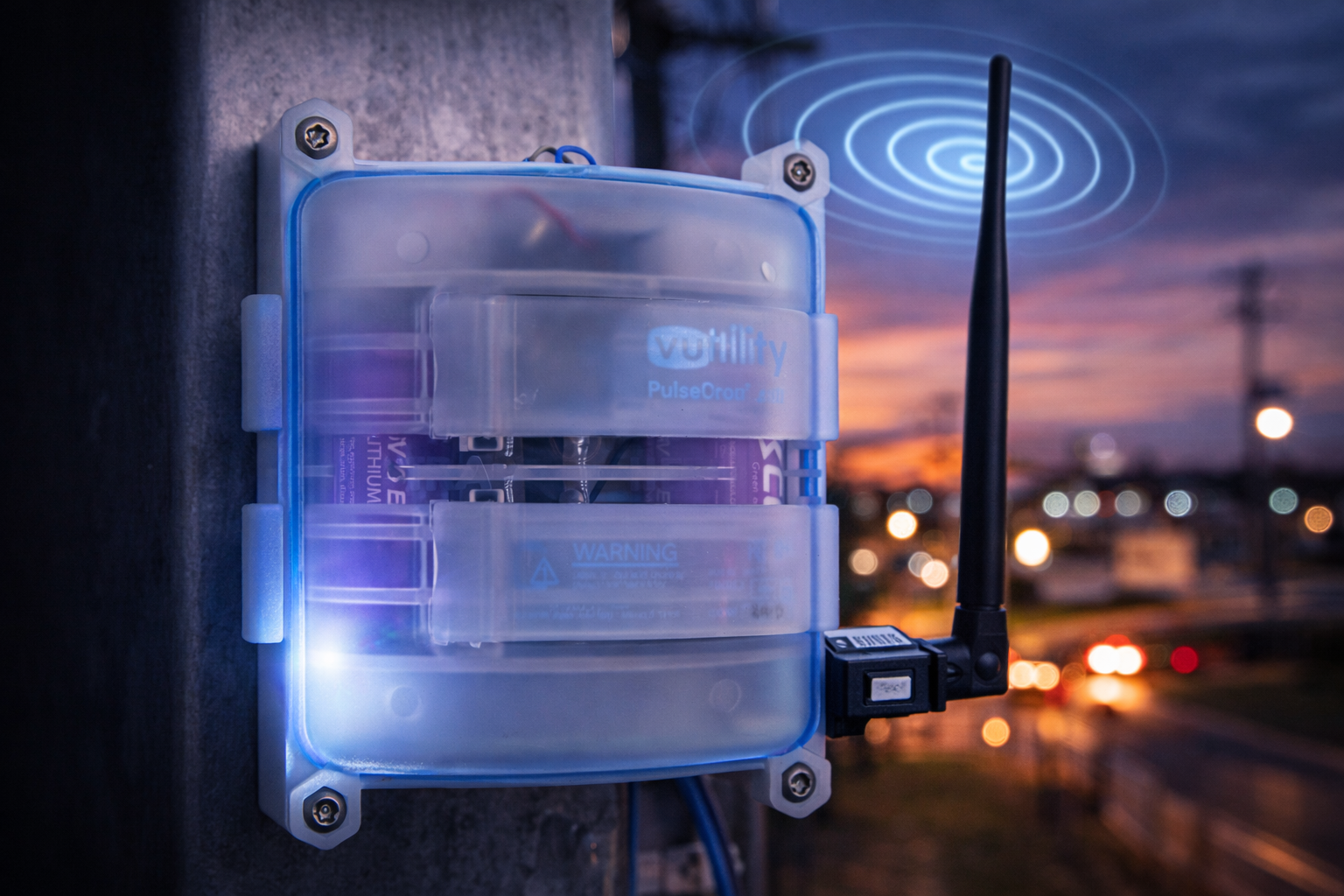
Pulse counting for everything that isn't already on LoRaWAN.
PulseDrop™ counts pulses from dry-contact and contact-closure outputs on legacy gas, water, electric, and BTU meters. IP67 for outdoor and weather-exposed installs. 10-year battery life. Drops a wireless tail on every existing meter in the building without rip-and-replace.
Key specs
- Measures
- Pulse counts from dry-contact meters
- Meter types
- Gas · water · electric · BTU · legacy
- Enclosure
- IP67 (outdoor-rated)
- Operating temp
- −40°C to +120°C
- Wireless
- LoRaWAN · US915
- Power
- 10-year battery (typical)
How they all work together.
Three sensors. One LoRaWAN network. One CloudVU dashboard. One API. Pick any combination of sensors per site — the platform doesn't care which mix runs underneath.
Specs deep-dive.
Expand a card for the full datasheet. Send the page to your facility engineer — every claim above is restated here with units, ranges, and references.
HotDrop™
Self-powered amperage clip · LoRaWAN · ANSI C12.20 Class 0.5
HotDrop™
Self-powered amperage clip · LoRaWAN · ANSI C12.20 Class 0.5
VoltDrop™
Self-powered polyphase meter · LoRaWAN · 85–305 VAC · up to 4000A
VoltDrop™
Self-powered polyphase meter · LoRaWAN · 85–305 VAC · up to 4000A
PulseDrop™
Pulse counting · IP67 · −40°C to +120°C · 10-year battery
PulseDrop™
Pulse counting · IP67 · −40°C to +120°C · 10-year batterySpec your deployment.
15-minute walkthrough with a Vutility engineer. We'll sketch a sensor plan against your panel schedule and answer the install / accuracy / integration questions your facility team will ask.